
The Only Retail Media That Uses All 5 Senses
I have a challenge for you. Open any retail media pitch deck and count the formats. The sponsored search, the on-site display, digital screens in-store, and targeted offers in the app. Now count the senses they use. I’ll bet that most of them use sight, and maybe sound if the screen has speakers (and anyone’s turned them on).
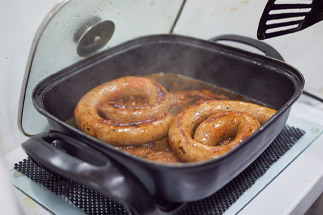
That’s it. An entire industry, growing at double-digit rates rapidly, built on just 2 of the 5 senses. Meanwhile somewhere on a shop floor, a shopper is holding a small cup of something warm, smelling it, tasting it, and talking to a real person about it. That’s a media placement too, and it just happens to be the only one that can do all of that at once.
Traditional Retail Media Can’t Do Everything
Did you know that the Advertising Association and WARC have forecast UK retail media to grow by 15.9% on 2026, and another 13% in 2027? Suppliers are following the shoppers, and the money is following the suppliers. The problem is that there’s a limit to what the most popular formats can do, and in most cases, they aren’t great at building up brands over the long term. They do well at converting demand that already exists, with things like sponsored search results catching people who are already looking. But if a shopper has never tried a product, smelled it, or held it, then there’s really very little that a screen can build on.
Luckily, that’s a gap that’s easily filled by sampling.
One Demo = 5 Senses
Let’s take a closer look at what’s really happening when a shopper stops at a demo station.
- Sight. They see the product itself, out of the packaging and as it would appear in their home. Much more impactful than an image on a box. They also get to see the packaging (which they could then recognise on the shelf), the display and the person behind it.
- Sound. Warm food, a freshly opened packet, a fragrance, a coffee. Smell is one of the first things that makes a shopper slow down and take a look, before they’ve even really registered what’s on offer. It’s also a great way to trigger sense memories and encourage inquisitiveness.
- Taste. The product gets into their mouth, giving them a direct answer to the question every shopper is asking – is this actually any good?
- Touch. The feel of the packet in their hand, the texture of the product, the temperature, and the weight. Making physical contact is a different kind of information, and it’s not something you can get from a screen.
- Sound. Food doesn’t just have a taste and a smell; it has a sound too. Rice Krispies taught us that! The crunch, the sizzle, the pop of the lid all help to create an opinion of the product before it’s even been bought. And of course, there’s the conversation with an enthusiastic brand rep who can give real answers to questions.
To be fair, not every sample hits all five equally. A hot food demo does more than a cold one, and a skincare trial relies on touch and smell more than taste. But the point still stands. No other retail media format can put the actual product into a shopper’s senses.
Why That Matters
We’re not just saying these things for the sake of it, even if you can already guess how sampling achieves all of this. There’s been a whole lot of research behind it, called sensory marketing. It’s the study of how engaging the senses affects what people perceive, judge and do. Aradhna Krishna’s widely cited review of the field, published in the Journal of Consumer Psychology, brings together decades of work on how sight, sound, touch, smell and taste shape the way consumers think about products. One of the most interesting findings is that touching a product (or even imagining touching it) tends to improve how people evaluate it, and that smell is closely linked to memory.
Taste is an interesting one as well. A follow-up study by Krishna and Elder looked at what shapes how food tastes, and they found it’s not just the mouth. All 5 senses feed into it, including what we see, smell, hear and feel as we eat. Put all of those things together, and the logic for sampling is hard to ignore. A demo isn’t 5 separate hits, it’s one experience where the sense all blend and reinforce each other, which makes it a much more persuasive and more memorable than a message delivered through a single sense.
If we take all of that into account, there are 3 really clear reasons that sampling belongs in your retail media offer:
- It’s media in every way that matters. Sampling gives a supplier paid access to your shoppers, at the point of purchase, in a specific place at a specific time. That’s exactly what every other in-store media format does. The only thing that’s different is that most retailers don’t package and price it that way.
- It does the job other formats struggle with. Trial and brand building are the things screen-based or display-based media are weakest at, while physical experiences are the strongest. Offering both gives your suppliers a full-funnel plan to buy.
- It’s measurable. This surprises a lot of people, but you can absolutely measure the impact of sampling campaigns. For example, compare sales in sampled stores against ones without sampling, and you can show suppliers what the demo contributed. That’s the kind of evidence suppliers need to come back, and the kind they already expect from the rest of the retail media.
Retail media is fun, and it’s full of interesting ways to be seen. But sampling is the only one that lets shoppers’ taste, smell, touch, hear and see what they’re being asked to spend money on. That’s not exactly a small difference! If you’d like to talk about how an always-on sampling programme could become a structured, sensory part of your retail media offer, get in touch with the Fizz team today.