
Are You Using The Right Approach to Sampling?
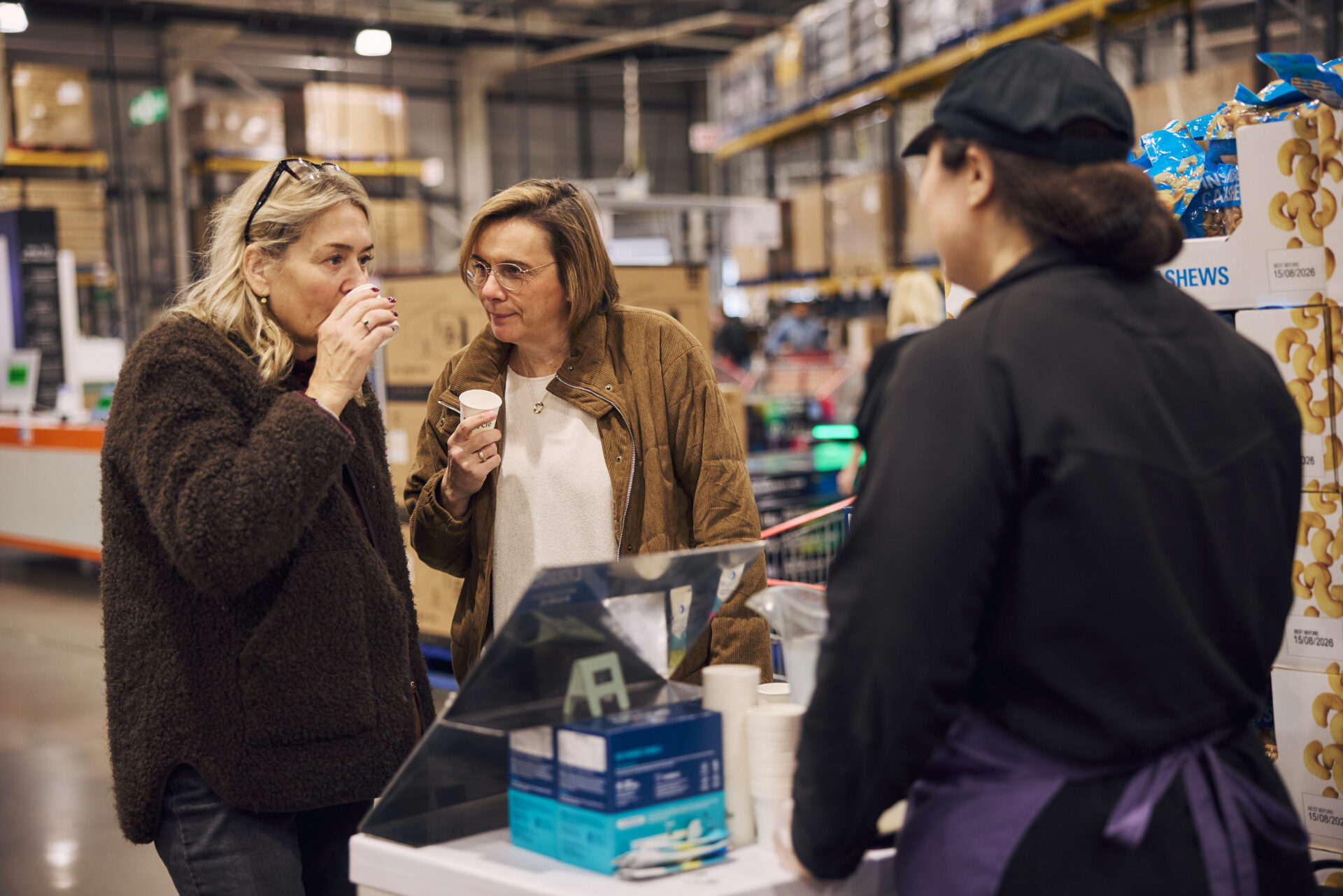
In-store sampling has always held a special place in the marketing mix. There’s something fundamentally powerful about letting shoppers try a product for themselves. It cuts through hesitation, builds trust quickly, and turns abstract claims you make about your products into tangible proof. When done well, sampling doesn’t just drive trial, it changes perception and creates customers.
But only if it’s done well. While sampling will always be a strong persuasive force, the way it’s often delivered doesn’t always keep pace with how retail, shoppers, and brands operate. And that mismatch is where the cracks begin to show.
The Way Sampling Used To Work
Traditionally, in-store sampling has been organised on a one-off, supplier-led basis. Brands book individual demo days through agencies, usually to support a launch, shift stock, or create a short-term sales spike. Each activation is treated as its own standalone event, often with limited connection to what else is happening in store.
From the outside, this can look flexible and convenient. In practice, it often results in a fragmented calendar, limited visibility, and inconsistent execution. Retailers may have multiple suppliers sampling at different times, with little coordination across categories or stores. Buyers can find themselves fielding questions about activity they didn’t plan, while store teams are left to accommodate demos without much notice.
The Operational Strain On Retailers
This reactive model puts pressure on retailers. Without a centralised strategy, sampling activity doesn’t always align with promotions, ranging decisions, or wider commercial goals. Income from sampling can fluctuate unpredictably, and operational teams may end up spending time managing issues that should have been handled upstream.
Instead of sampling being a strategic lever that enhances the in-store experience, it risks becoming an operational headache. And when control sits outside the retailer, opportunities to optimise performance are often missed.
Challenges For Brands And Suppliers
Brands and suppliers face their own frustrations. Managing multiple agencies, booking individual dates, and navigating unclear expectations takes time and resource. Measurement is often inconsistent, making it difficult to compare activations or understand what’s actually driving success.
When each demo is treated as a one-off, valuable learnings disappear as soon as the day is over. There’s little opportunity to refine messaging, improve engagement techniques, or build on what worked previously. Even strong products can underperform if the experience doesn’t reflect the brand properly.
The Shopper Experience Problem
Perhaps the biggest issue is how this inconsistency shows up for shoppers. One week they might encounter a polished, engaging demo that genuinely helps them discover something new. The next, it feels rushed, awkward, or disconnected from the store environment.
Over time, that unpredictability chips away at trust. Sampling stops feeling like a helpful service and starts to feel like noise. In a retail environment where attention is already hard-won, that’s a missed opportunity.
Why The Old Model No Longer Works
The core problem with traditional sampling is that it treats each activation in isolation. There’s no continuity, no accumulation of insight, and no long-term vision. In today’s retail landscape, where consistency and experience matter more than ever, that approach simply isn’t enough.
Sampling still works. But only when it’s done properly, with structure, strategy, and purpose. Funnily enough, that’s what we do at Fizz.
In Part 2 of this series, we’ll explore how an always-on approach addresses these challenges, and why it’s becoming the smarter way to deliver in-store sampling. In the meantime, if you have any questions, or you want to discuss your sampling approach with an expert, we’d love to be able to help. Just get in touch with the team today and book your consultation.